© CASCB
Read this issue online
Scan or click to open it in your browser
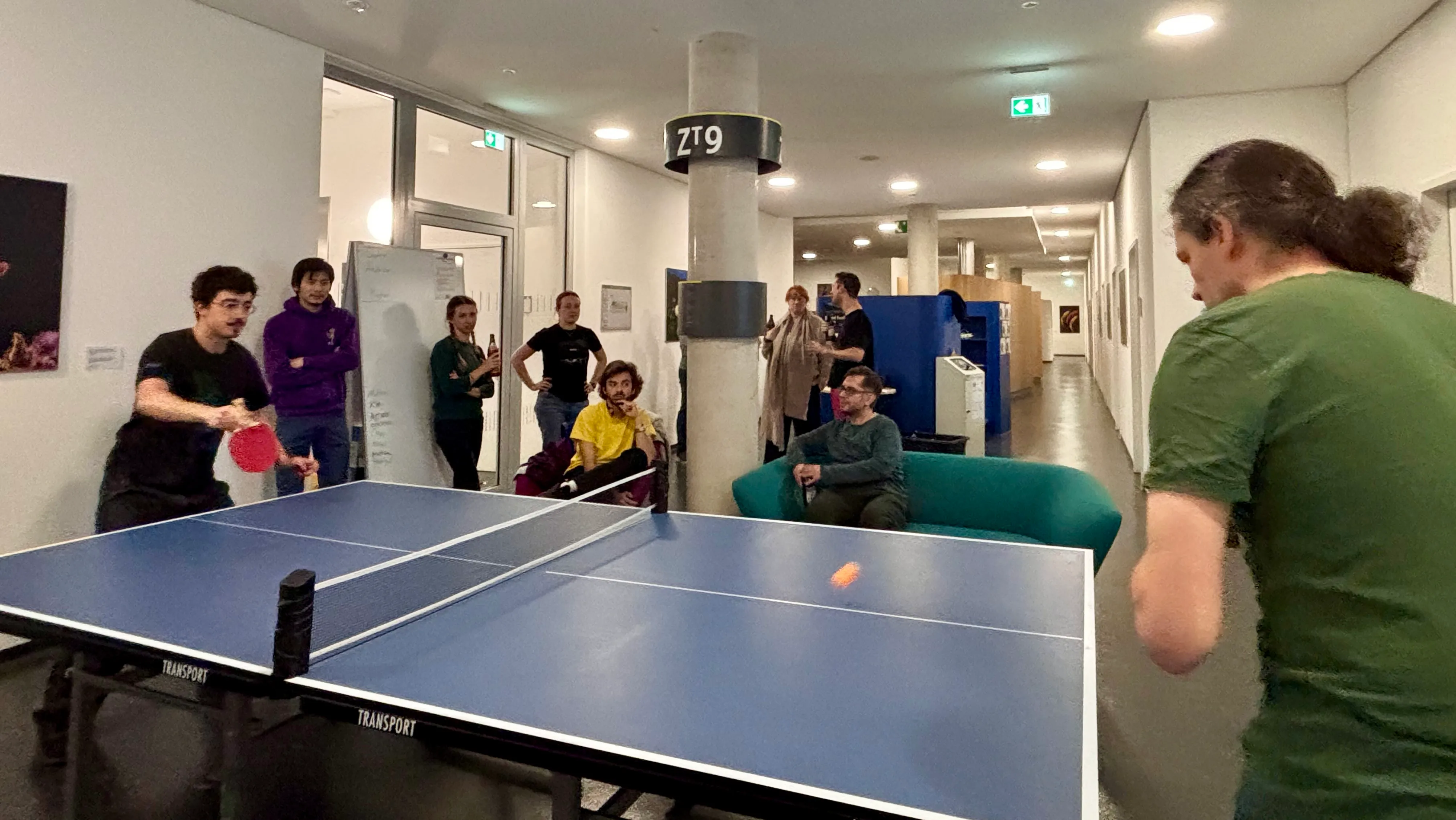
Paddles up at the second Swarm Cup! Find out who took the title below.
Important news
EVENTS
Sips & Science is back for its next edition on December 4th, 6pm - this time in Möggingen. The format stays the same: short, fun talks from a few scientists about what excites them in their research, in a relaxed setting with a drink in hand. Organised jointly by the CASCB and IMPRS PhD reps. Speakers will be announced soon - stay tuned, and hope to see you there!
EVENTS
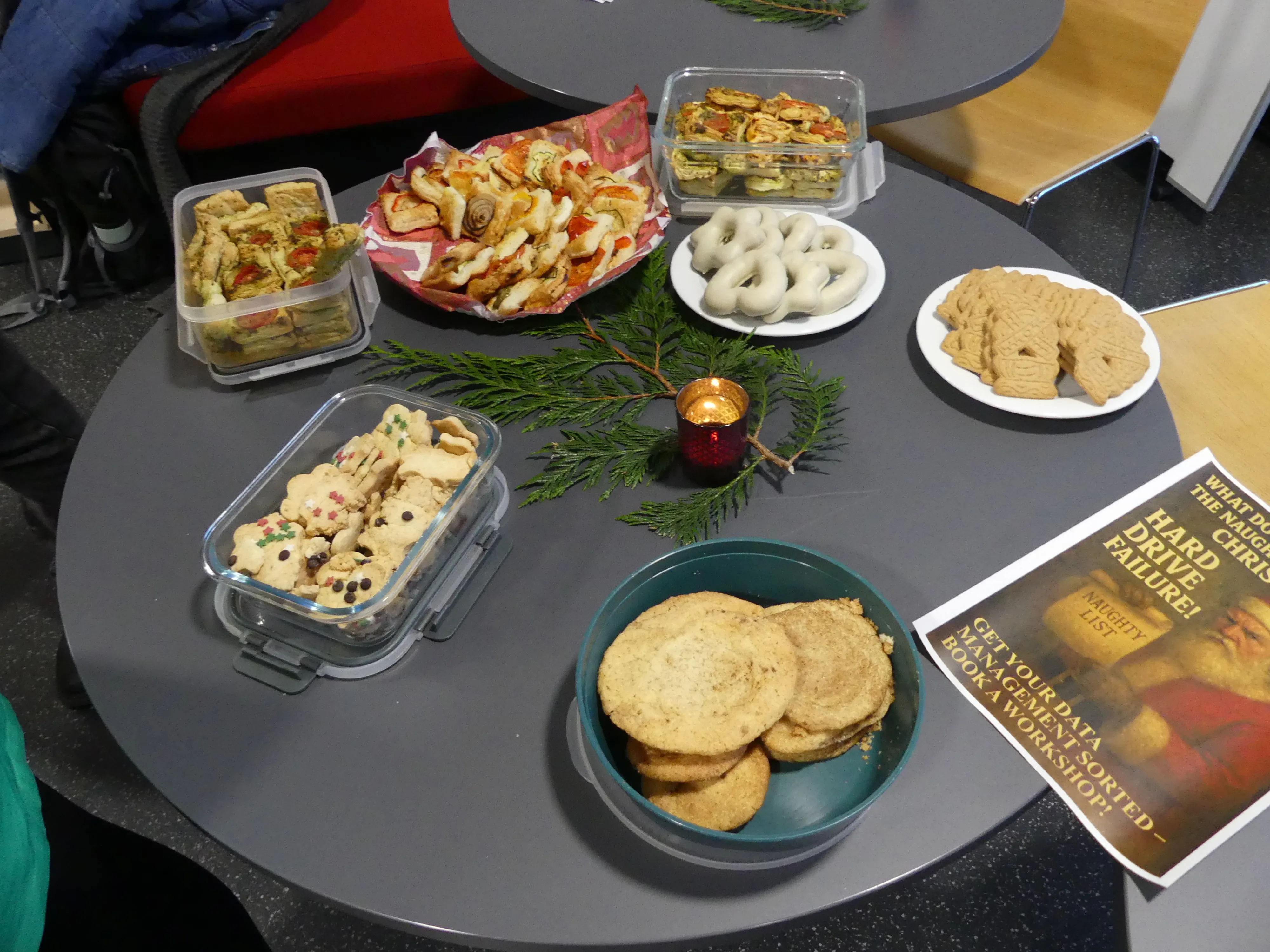
Let’s celebrate the end of the year together on Thursday, December 17th from 4pm on the Cluster floor! CASCB and adjoined groups are warmly invited. Bring a favourite winter treat from your home country to share, and our PhDs will be selling mulled wine in support of their next events. Let us know if you are coming and whether you would like to join the Secret Santa. PS: The table tennis table is still on our floor ;)
MEDIA
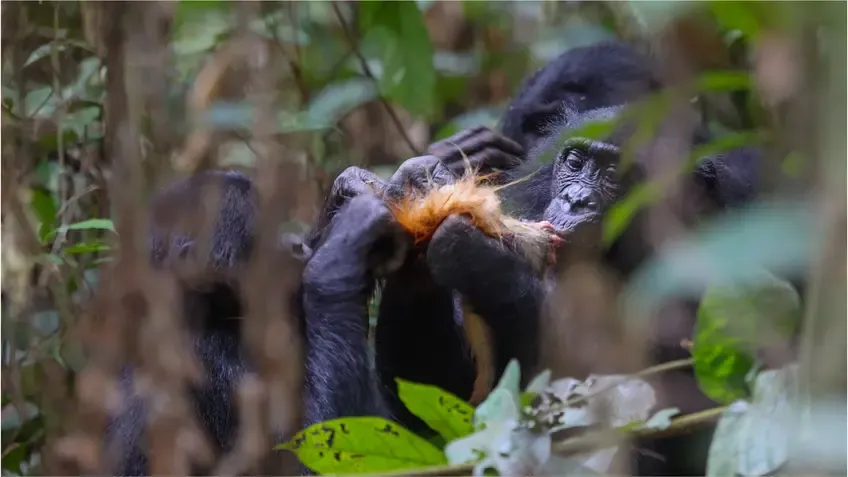
CASCB researchers were part of a ten-year study of two wild bonobo communities showing that hunting is mostly done by females. Females led 60% of recorded hunts and took large ground-dwelling prey about three times more often than males, regardless of whether they were carrying infants — challenging the idea that hunting was primarily a male activity in our own ancestors.
Have you heard?

HIGHLY CITED, AGAIN
CASCB speaker Iain Couzin has been named a Highly Cited Researcher by Clarivate for the eighth time, placing him once again among the top one percent of the world’s most cited researchers. As in previous years, he appears in the “Cross-Field” category, which recognises work whose influence reaches across disciplines, fitting for a publication record spanning collective behaviour in fish and locusts, schooling in robots, and AI-based tracking and posture estimation. Congratulations!
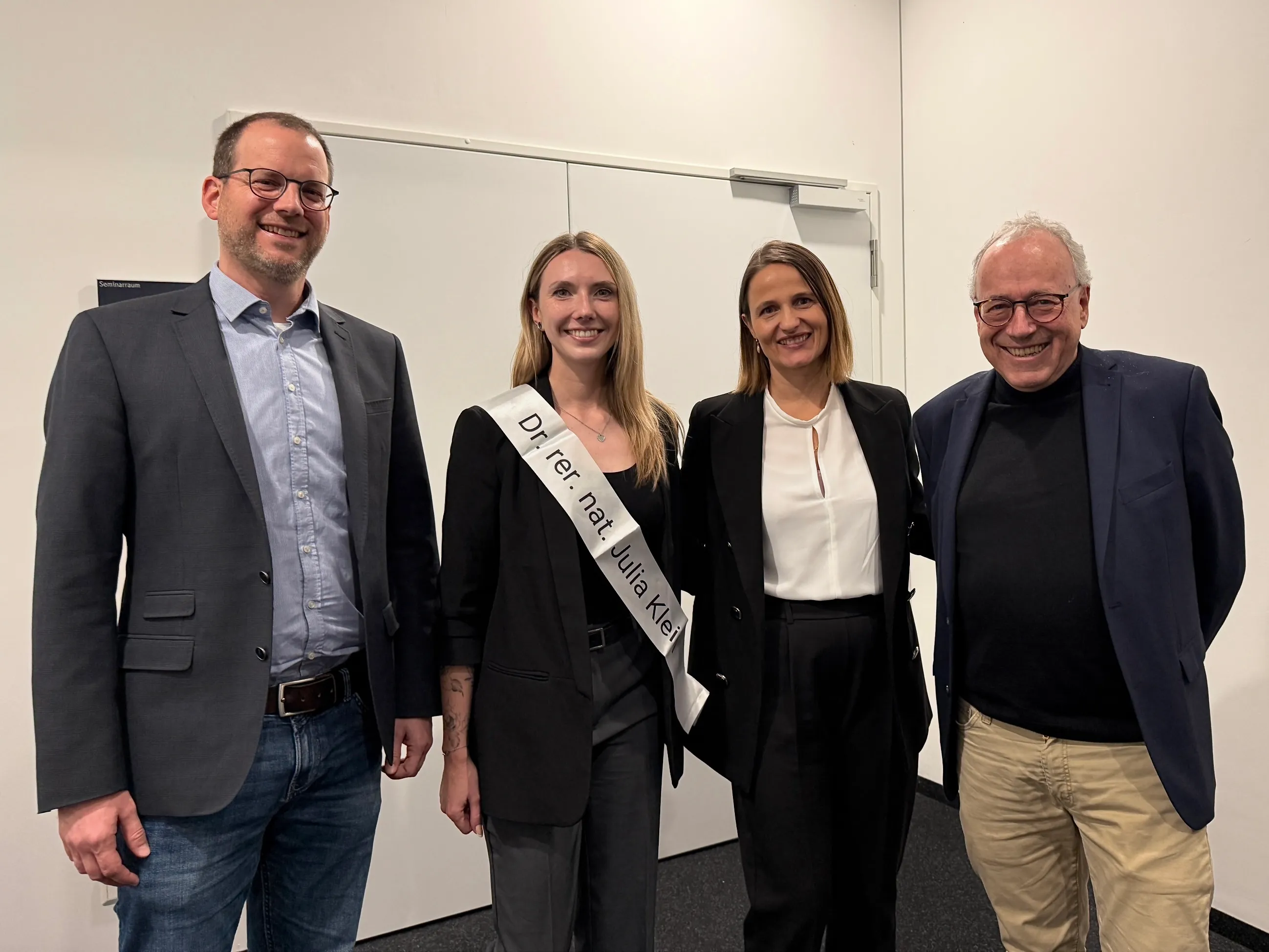
JULIA DEFENDED HER PHD
“How do honeybee colonies and robot swarms achieve coordinated behaviour without any centralised control? In my PhD, I used formal methods, statistical inference, and machine learning to uncover how complex collective behaviour arises from simple, noisy interactions, even when data is scarce and the underlying model is unknown. A big thank you to the CASCB for all the support that made this PhD possible, the wonderful office team, and the fun times in the PhD network!”
In the cluster
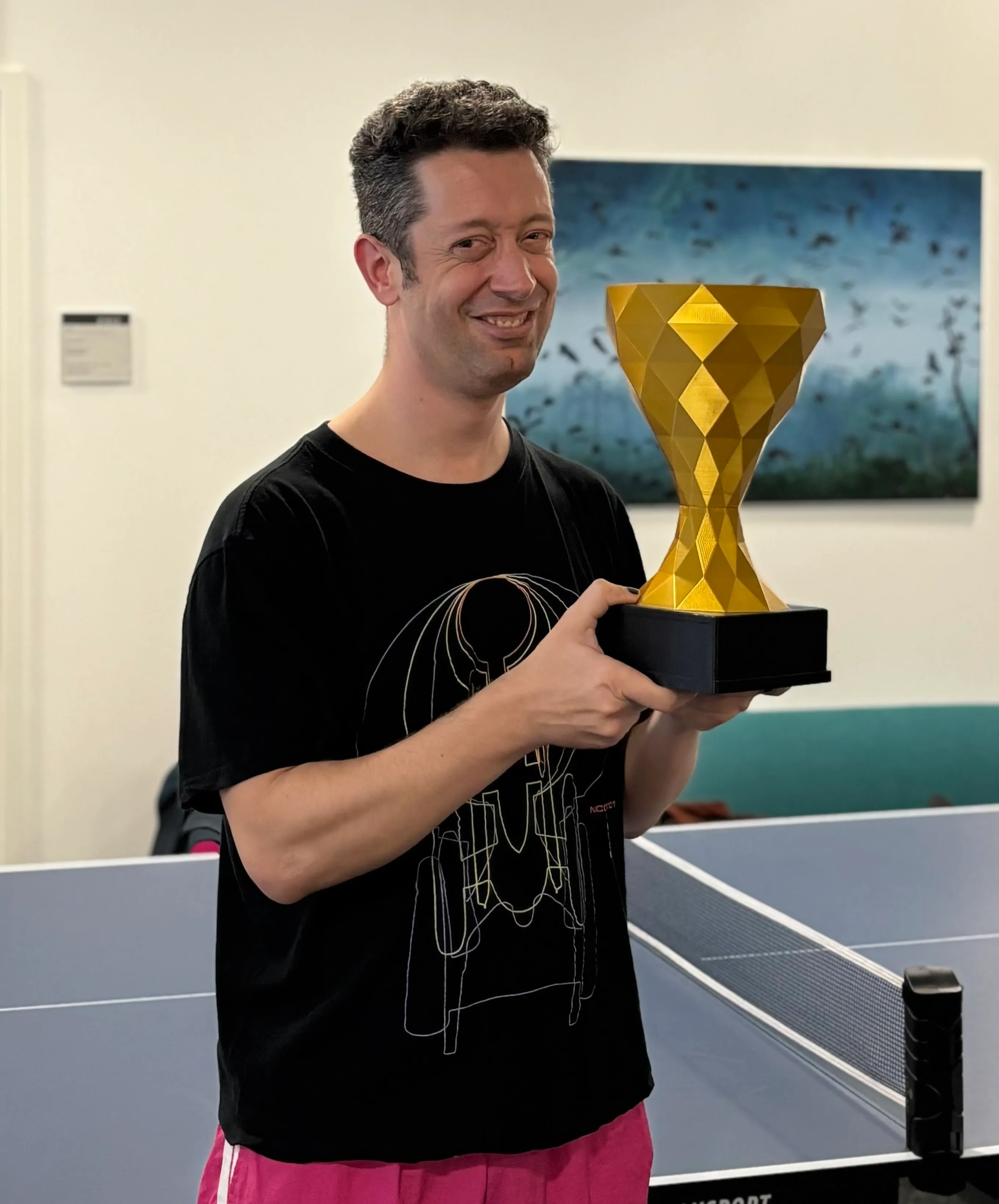
SWARM CUP 2.0 RECAP
The second Swarm Cup brought CASCB members back to the table, and once again it was Andrew McCauley who held the hill. Challenger after challenger stepped up, but the evening kept returning to the same trio at the top: Matheus Stefanini Mariano, Christophe Bousquet, and the reigning champion. Plenty of long rallies, near-misses, and laughing at the table. Thanks to everyone who came, played, and cheered. The hill is clearly in need of fresh challengers — so consider this your notice to start practising before the next edition!
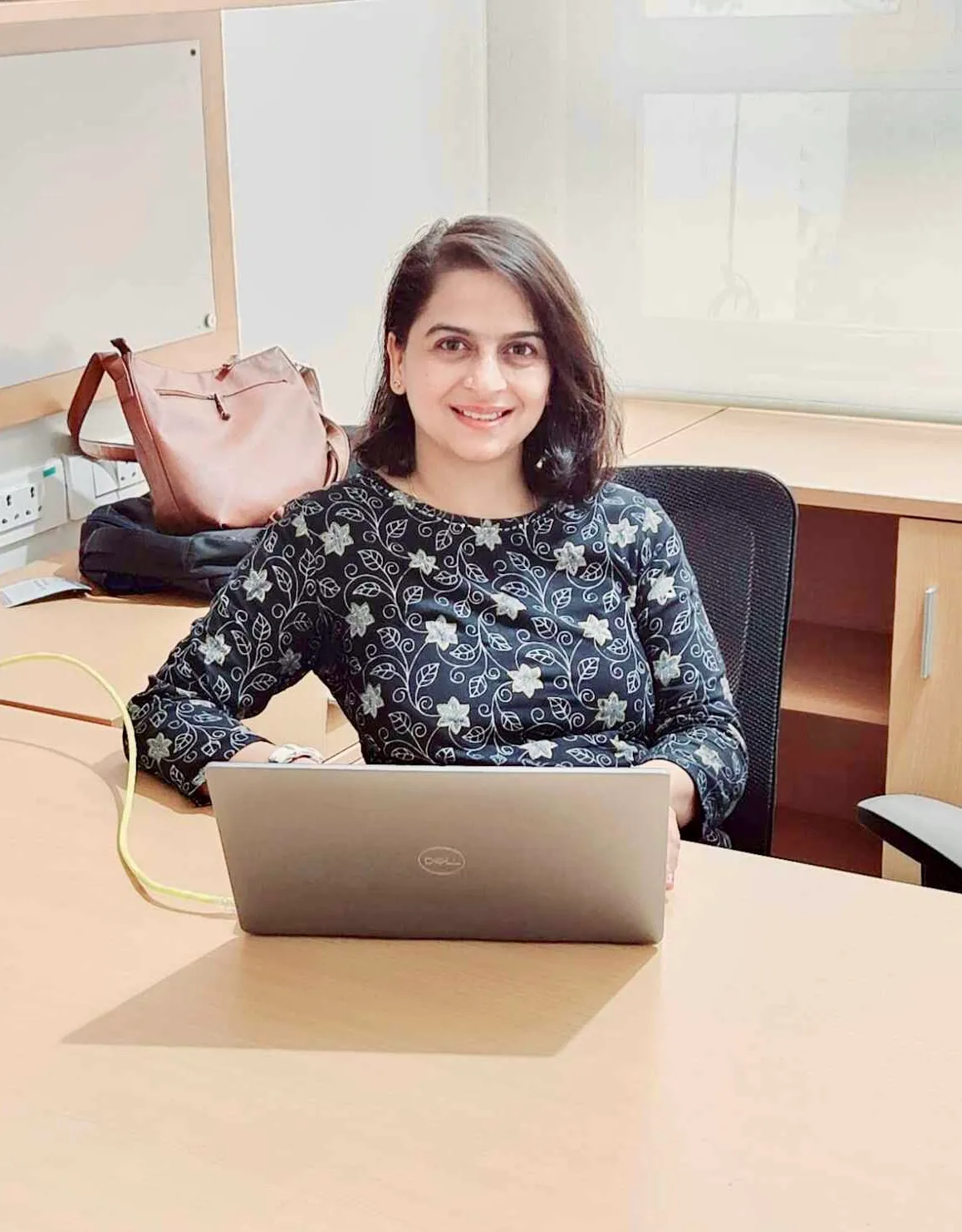
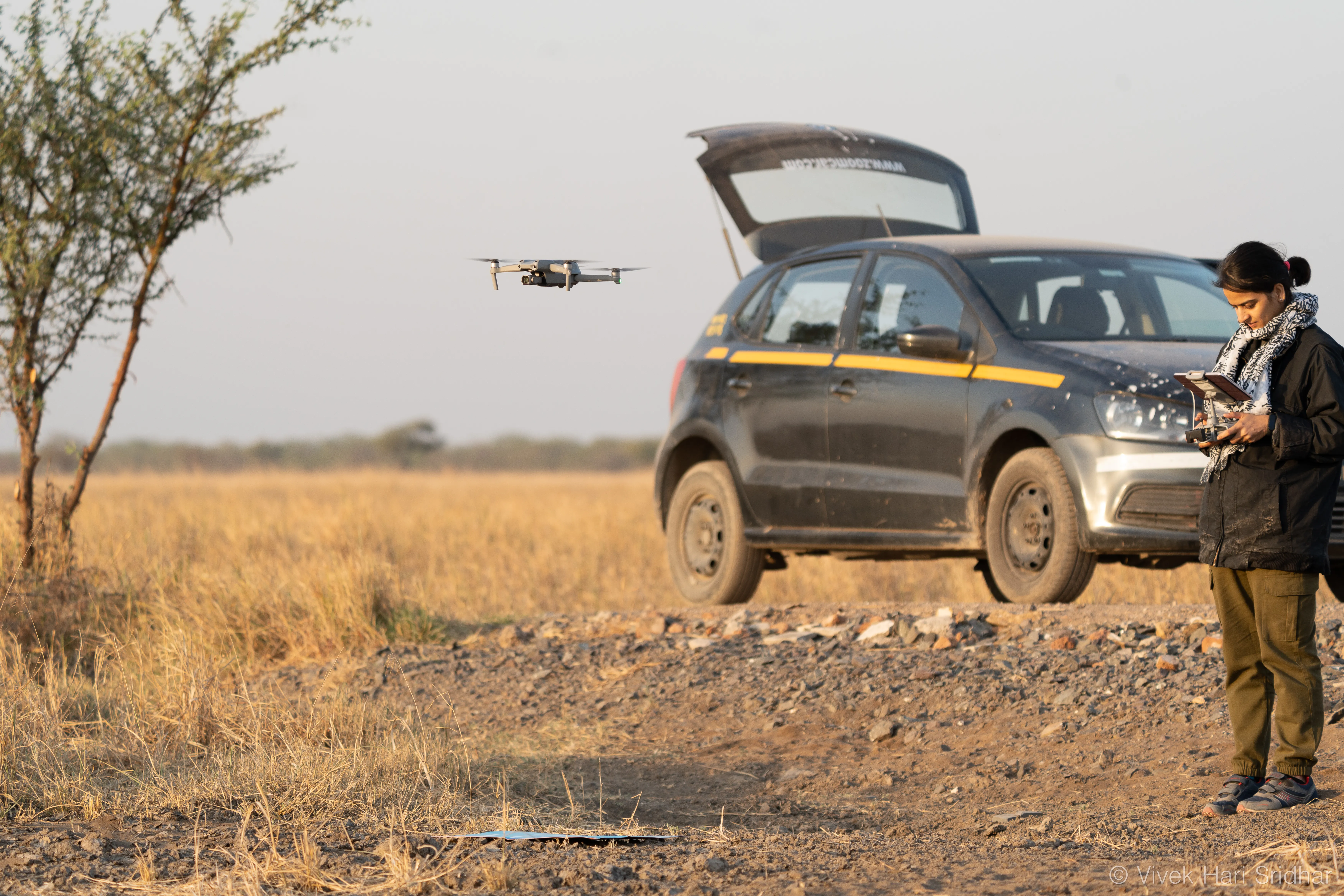
ALUMNI SPOTLIGHT - AKANKSHA RATHORE
“It’s been an exciting journey since Konstanz! I am now an Assistant Professor at BITS Pilani, Hyderabad, where I lead the Data Science and Computational Ecology Research (DSCOvER) lab. My interdisciplinary journey began with a BTech in Computer Science, followed by a PhD in Ecology, driven by my fascination with animal behaviour. At the MPI-AB, I brought together movement ecology, behavioural research, computer vision, and machine learning to study collective animal behaviour. BITS is a vibrant place to take this journey further, with brilliant, motivated undergraduate students and the flexibility to pursue unconventional research. I particularly enjoy balancing research with teaching and bringing interdisciplinary perspectives into the classroom.
I’m delighted to remain connected with Konstanz through Indo-German collaborations and our Max Planck Partner Group. The latter has encouraged me to take a new scientific leap: after working primarily on mammals, I am now exploring collective behaviour in one of my latest fascinations – fireflies! My research group’s tagline captures the advice I’d share with ECRs: Stay foolish, stay curious! Be willing to explore unfamiliar ideas and follow questions beyond your comfort zone. Some of the most rewarding scientific journeys begin where you least expect them!”
New publications


Papers with CASCB authors that appeared since the last issue.
-
Her Journey, Your Perspective: Designing a Game on Afghan Forced Migration Experiences
-
Immune-challenged wild mallards move less and spend more time in sheltered habitats
-
Bioacoustic raw-audio transformer effectively and efficiently encodes mixed sample rate data
-
Greater Mouse-Tailed Bats Glide During Approximately 50% of Their Flight
-
SPREAD, a framework and open-source R toolbox to quantify behavioural contagion
-
Practical implications of temporal body mass variation for biologging and comparative studies
UNI OFFERS
Steady as You Go – Building Resilience in Communication with Mindful Techniques
Research involves a lot of talking to people, and not all of those conversations are easy. This interactive online workshop introduces mindful communication as a practical tool for doctoral and postdoctoral researchers: setting an intention, staying present, listening generously, and speaking with purpose. Exercises in breakout rooms and group sessions cover handling difficult situations with more emotional resilience, spotting unhelpful thinking patterns, and strengthening nonverbal communication, with feedback along the way. Join on December 8th, 9am–5pm online. Registration required.
MESSMER FOUNDATION RESEARCH AWARDS
The Werner and Erika Messmer Foundation is offering three research awards of 10,000€ each to postdoctoral researchers at the University of Konstanz. The awards are open to researchers from all faculties who have completed their doctorate but are not yet full professors and are intended to support forward-looking research ideas. Selection criteria include innovation potential, relevance for research and society, and contribution to value creation in the region. Applications are due by December 18th, in German.